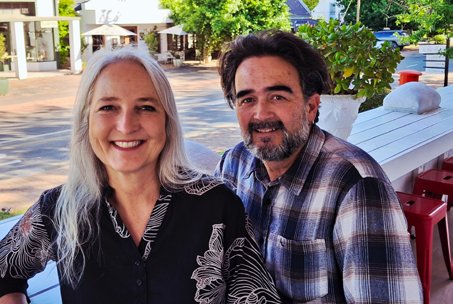
When Greyton local Alistair King first heard about a small Karoo town that held an annual wire car race, he never imagined it would one day become the centre of a global creative project — one that would unite storytelling, technology, and humanity in a remarkable way.
“Way back, a friend told me about a place called Philipstown that held a wire car race every year,” Alistair recalls. “I remember being fascinated, but I just filed it away. Years later, when we were brainstorming ideas that could bring tech and humanity together, someone mentioned wire cars. Another suggested adding trackers to create a digital race — and suddenly I remembered Philipstown. In 30 seconds, the whole idea was born.”
What began as a creative concept soon became something much deeper. “When we visited Philipstown and saw the extent of its social distress, we realised this was far more than a creative exercise. It was a profoundly human story — their story — and they deserved to benefit from it.”
A Proudly South African Story
The resulting film, The Philipstown Wire Car Grand Prix, is both deeply South African and universally human. At its core, it follows eight children as they train and compete in an extraordinary 3.2 km race — barefoot, determined, and full of heart.
“The film is really about courage, rivalry, and resilience,” says Alistair. “You’ll need a box of tissues nearby. It’s not just the race — we follow the kids in the build-up to race day, add some staggering CGI wizardry, and even a cameo from Siya Kolisi.”
Although the film features cutting-edge visual effects created by an Oscar-winning German CGI team, nearly every other aspect — from direction to score — is proudly South African.
The film is only part of what he calls a “self-enablement ecosystem.” Alongside the documentary, the WireCar Foundation now supports local initiatives, runs an online store, and offers a free mobile game mapped on the streets of Philipstown. “Wire, which is often discarded, became a metaphor — for what can happen when you pick something up and mould it into something beautiful and useful.”
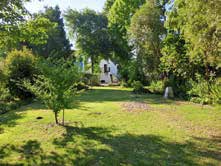
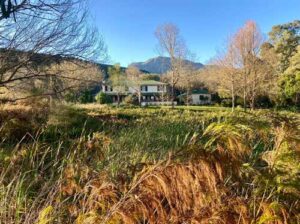
Though his work takes him far, Alistair’s roots are firmly in Greyton. “We’ve had a home in Greyton for 20 years, and now it’s officially our base. The calm, the people, the horses using our stoop for shade — it’s one of the most tranquil places on earth.”