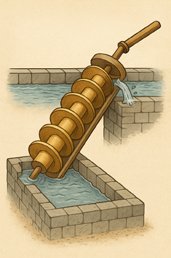
Long before we were untangling garden hoses or adjusting sprinkler timers, our ancestors were already perfecting the art of getting water from there to here. The story of irrigation is a 5,000-year tale of human creativity — and stubbornness — that transformed deserts into gardens and villages into thriving communities.
The ancient Sumerians of Mesopotamia were the first to make irrigation fashionable, carving canals from the Tigris and Euphrates rivers around 3,000 BCE. Their muddy ditches didn’t look like much, but they turned barren plains into the “Cradle of Civilisation.” The Egyptians soon followed, using the annual flooding of the Nile to their advantage. They even invented the shaduf, a hand-operated lever with a bucket at one end — the original water-lifting gadget.
Fast-forward to the present, and you’ll still find echoes of these ancient systems right here in South Africa. In towns like Greyton, lei water channels snake quietly along the roadside — gravity-fed furrows that bring mountain water to gardens and smallholdings, just as they did a century ago. Every household once had its turn to divert the flow, and the community lei water turn (or quarrel about it!) was practically a social event. It’s living history — an open-air museum of irrigation in motion.
So next time you open a valve or adjust a sprinkler, spare a thought for Archimedes, the Nile farmers — and the lei water keepers of Greyton — all part of the same long and flowing story.